

Texans like to say that everything is bigger there.
If you visit Waco Mammoth National Monument, you’ll hear how the fossils found there are the largest species of mammoth - bigger than the famous woolly mammoth. In Round Rock, Texas, you can get a 14-inch donut that weighs 2 pounds. And if you visit the State Fair of Texas, you can’t miss the tallest cowboy in the world, the 52-ft-tall Big Tex.
Being the second biggest can provide you with bragging rights, too, though. And in the town of Canyon, Texas, you’ll not only find the second-tallest cowboy in the world, 47-ft-tall Tex Randall, you’ll also find the second-largest canyon in the United States.
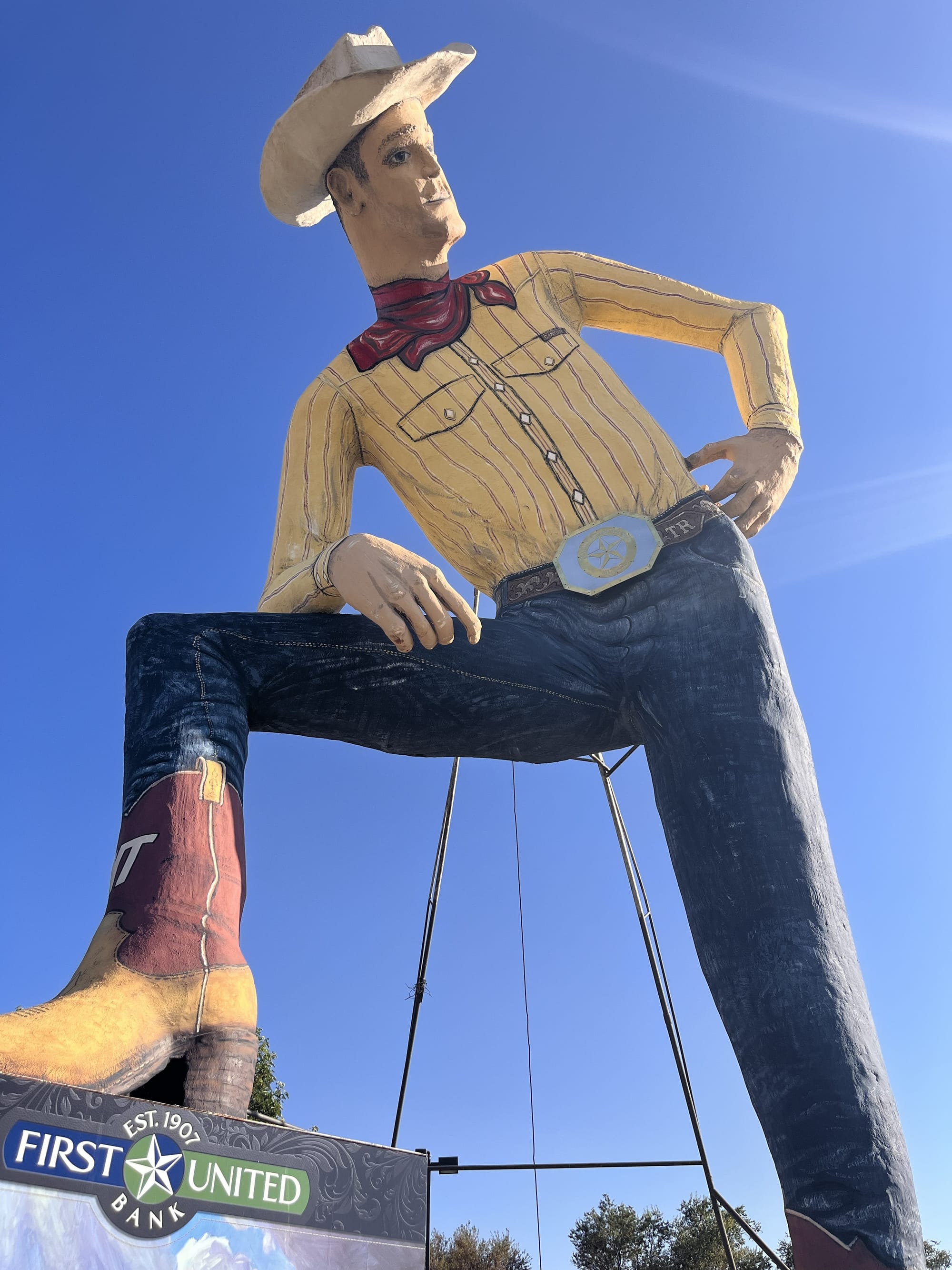
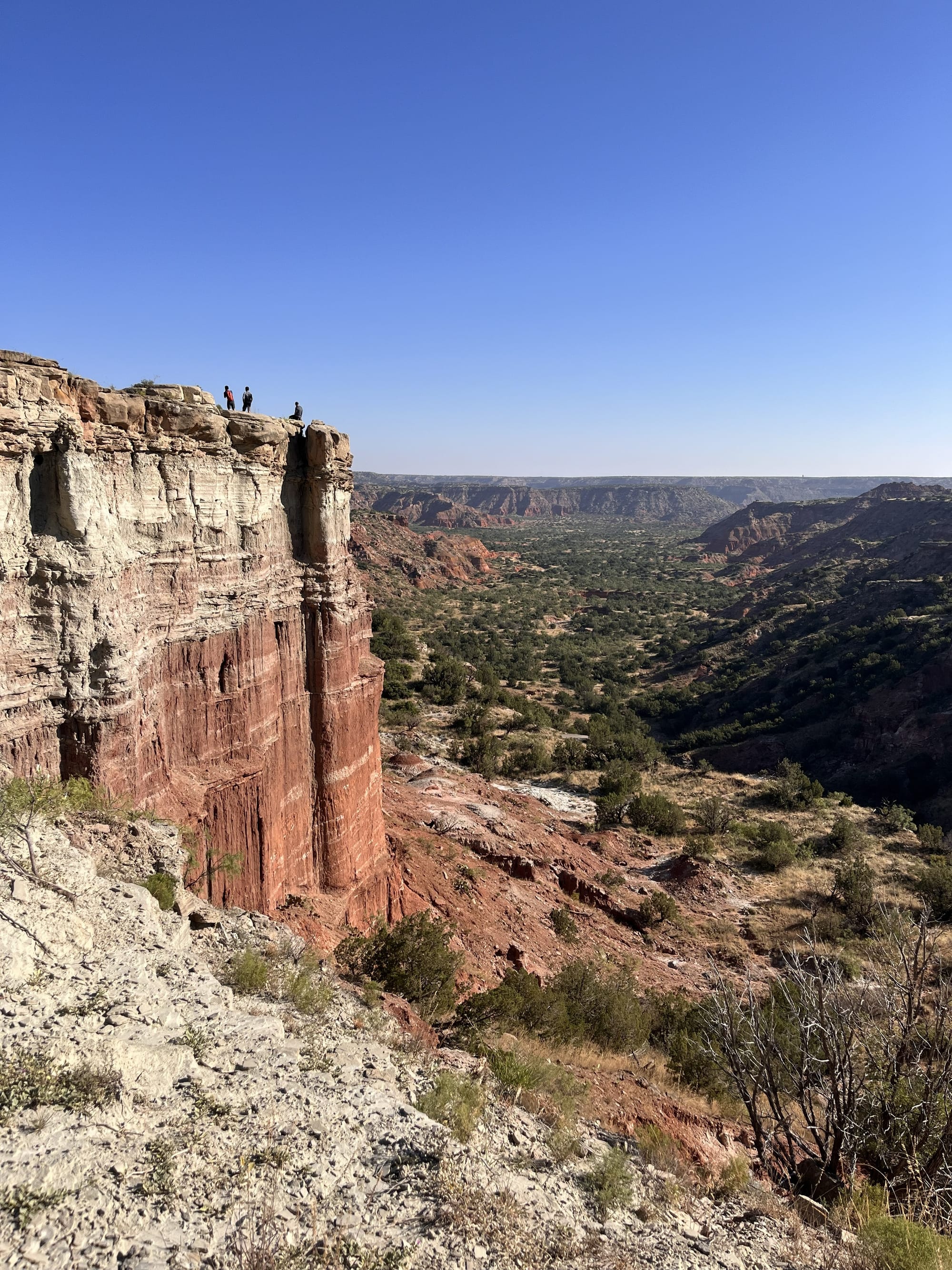
You can find giant cowboys and grand canyons in Canyon, Texas. © Laura Pevehouse
Why They Call It the Grand Canyon of Texas
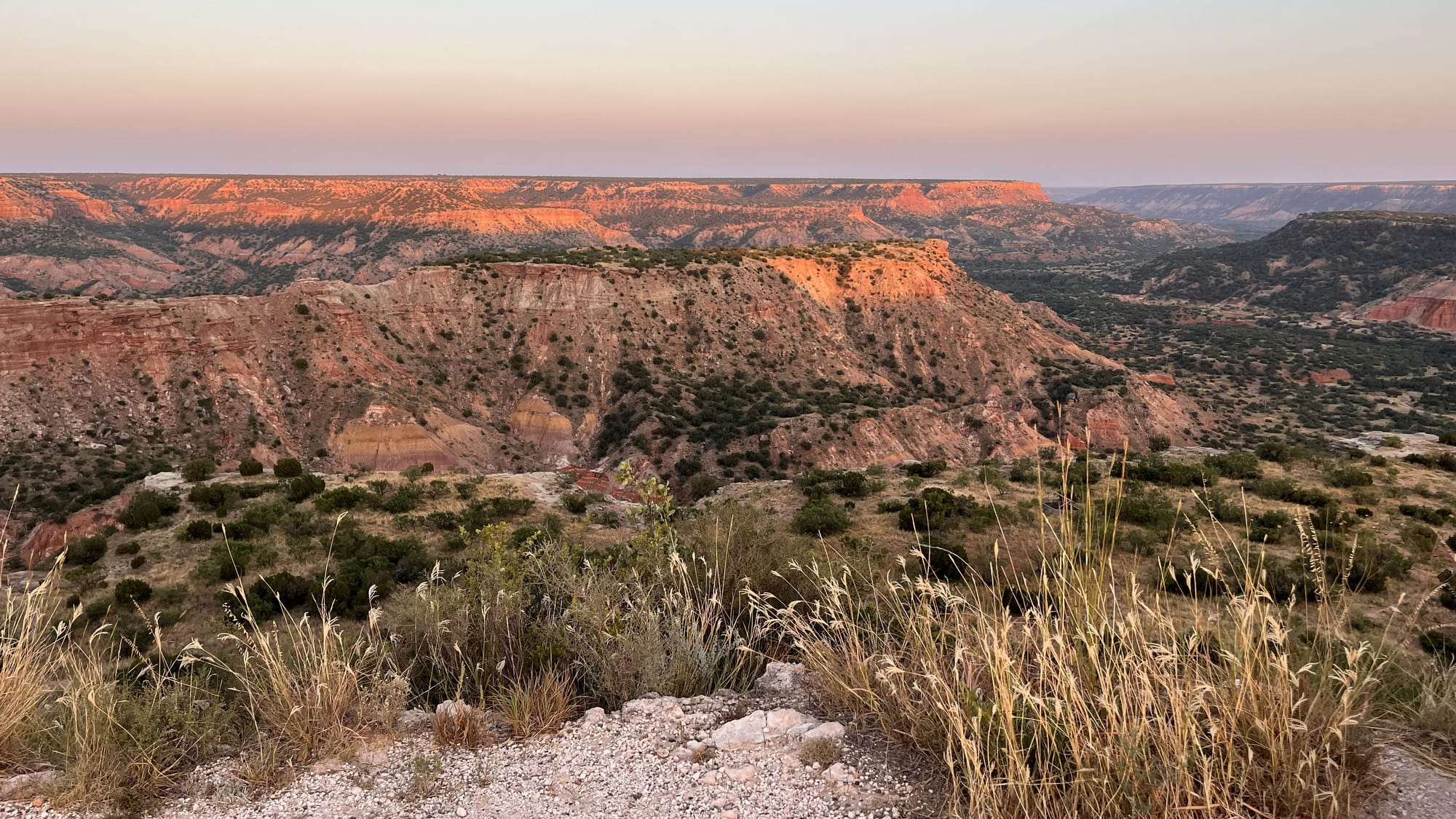
It may not be “the” Grand Canyon, but Palo Duro Canyon is sometimes called the Grand Canyon of Texas. It’s about 120 miles long, 20 miles wide, and is up to 800 feet deep. The upper section is open for public exploration in the 28,000-acre Palo Duro Canyon State Park.
It’s believed that humans have inhabited the canyon as far back as 10,000–15,000 years, and the first non-indigenous people to discover it were part of a Spanish expedition in 1541. Apache lived there at that time, until the Comanche and Kiowa tribes displaced them. Then, in 1874, United States troops forced them to reservations in Oklahoma.
The canyon was formed by a millennia of water erosion at the edge of the famously flat Llano Estacado. When driving to it from the west, it creates a dramatic drop-off from those “plains so vast that I have not found their limit anywhere,” as Spanish Conquistador Coronado called the mesa after that 1541 expedition.
I was fortunate to visit the park at the time of a super blue moon, which made the colors of its four geologic layers even that much more beautiful as I viewed its rise from the Civilian Conservation Corps (CCC) trail overlook. When the state bought the park land, CCC workers spent five years building roads, trails, cabins, and the visitor center.
And while the park’s hoodoos are not as numerous as those of Bryce Canyon National Park, its most famous rock formation stands out as an aptly named lighthouse. The Lighthouse trail is the park’s most popular, and ironically, the park website notes it is also where most heat-related injuries and deaths for people and pets occur. It can be a little challenging, and I was glad to have the custom walking stick that a friend had made for me in Chama, New Mexico, when I navigated the climb to the top.
There’s definitely little, if any, shade on the trail there, so I chose to make my start at sunrise. I thought that might also help me avoid the crowds, but a large contingent of church youth groups seemed to have had the same thought. And while I often say that being in nature is my church, the worship was elevated that morning as I got to hear the teens sing several hymns atop the rocks.
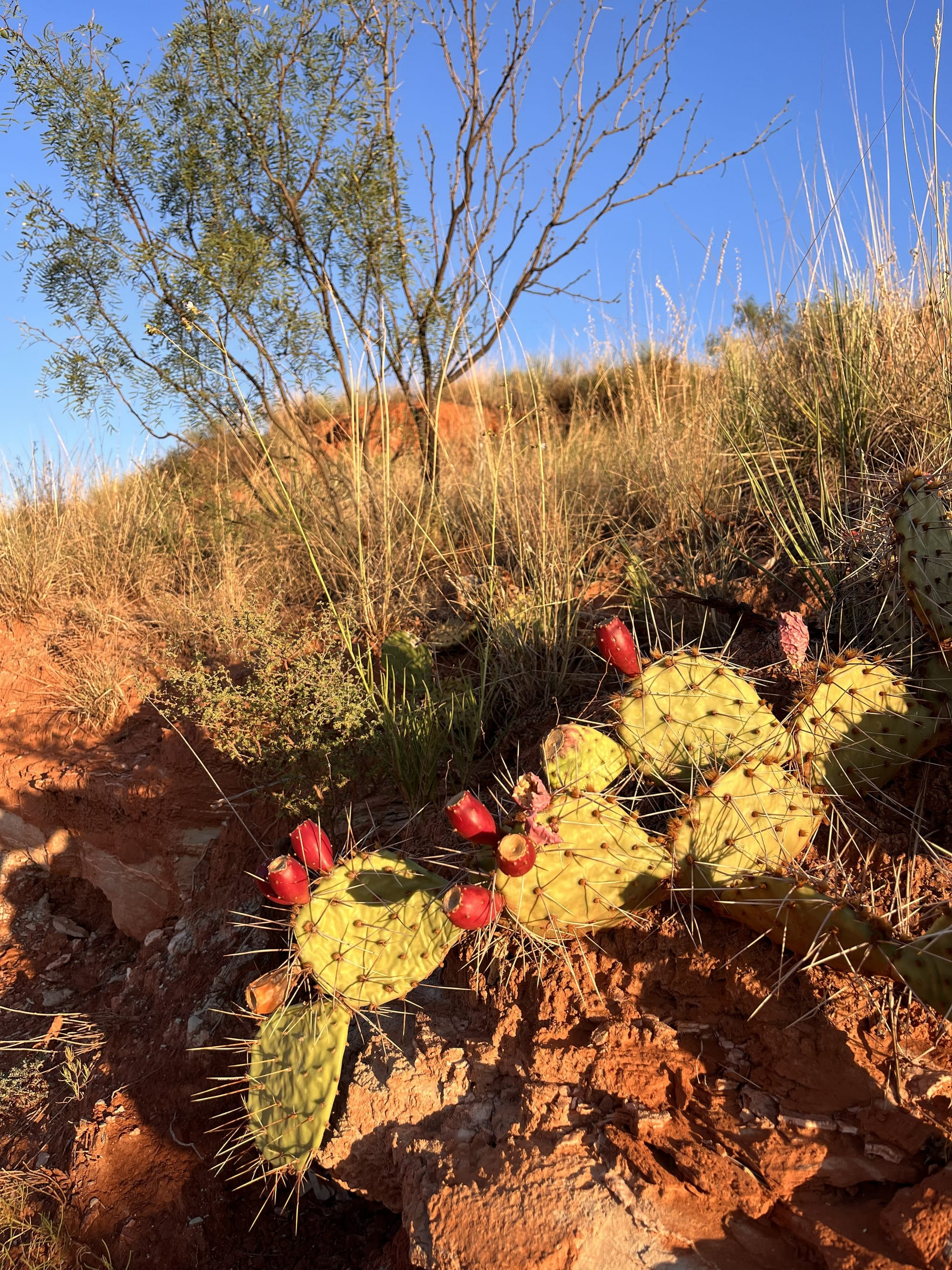
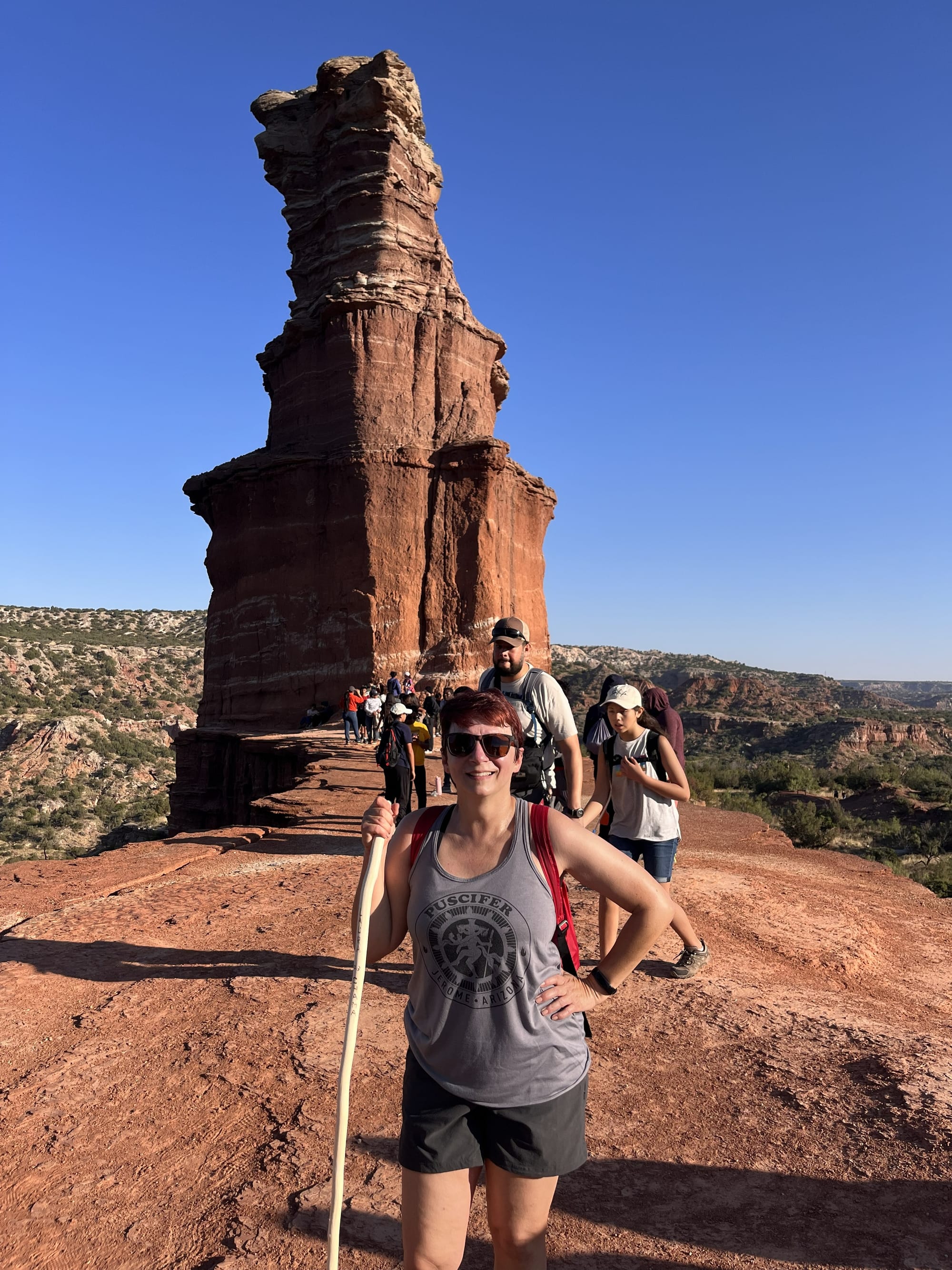
Palo Duro Canyon State Park trails offer many ways to explore the geologic wonders of the grandest canyon in Texas. © Laura Pevehouse
Where to Sleep, Ride, and Roam in and Around Palo Duro
Those youth groups were likely staying at some nearby camp, but there are a wide variety of options for camping in the park itself - from backcountry tent sites to cabin lodging along the rim or on the canyon floor, and even equestrian sites. Yes, you can BYOH (Bring Your Own Horse) for a canyon ride through the former grazing lands of the historic JA Ranch. Or, book a tour with the local outfitters at Old West Stables.
Many people choose to stay in nearby Amarillo because of its location on I-40 and an abundance of chain hotel options, but I was there for a week with my cat and dog, so I opted for an Airbnb cottage built in 1924 in the city of Canyon. That meant I could walk my dog past the historic house where the painter Georgia O’Keeffe lived while teaching at what was then called West Texas State Normal College, or now, West Texas A&M University. She enjoyed painting Palo Duro, which she described as “a burning, seething cauldron, filled with dramatic light and color."
The famous painter’s time in Canyon was just one of the historical surprises I found there. The Panhandle-Plains Historical Museum (PPHM) was one that I did not allocate enough time to explore. While Canyon’s cowboy statue and Palo Duro may be runners-up in their categories, PPHM lays claim to be Texas' largest history museum. It has everything from dinosaurs to the expected West Texas petroleum industry history, as well as the unexpected art collection and a nearly 14,500-item textile collection spanning evening gowns, cowboy hats, and quilts.
There’s one more surprising thing you’ll find if you visit Canyon and Palo Duro at the right time of year - a large-scale outdoor musical drama written by a Pulitzer-Prize-winning playwright. Described as a "musical romance of Texas panhandle history," the show TEXAS has taken place in an amphitheater carved out in the Palo Duro Canyon basin every June-August since 1960. I, unfortunately, was there just after the year’s production had closed, so I can’t speak to the performance, but its longevity seems to do that pretty well.
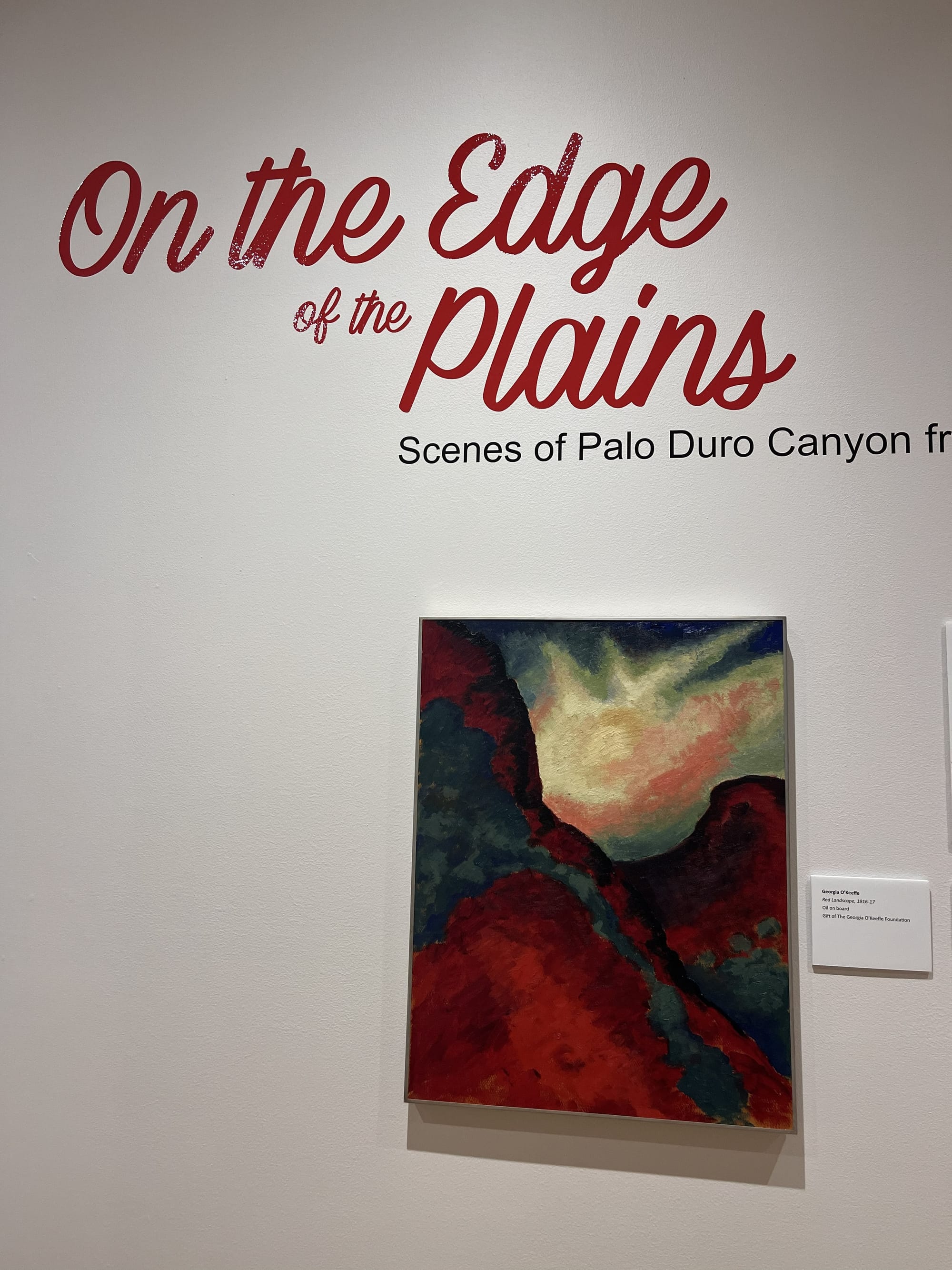
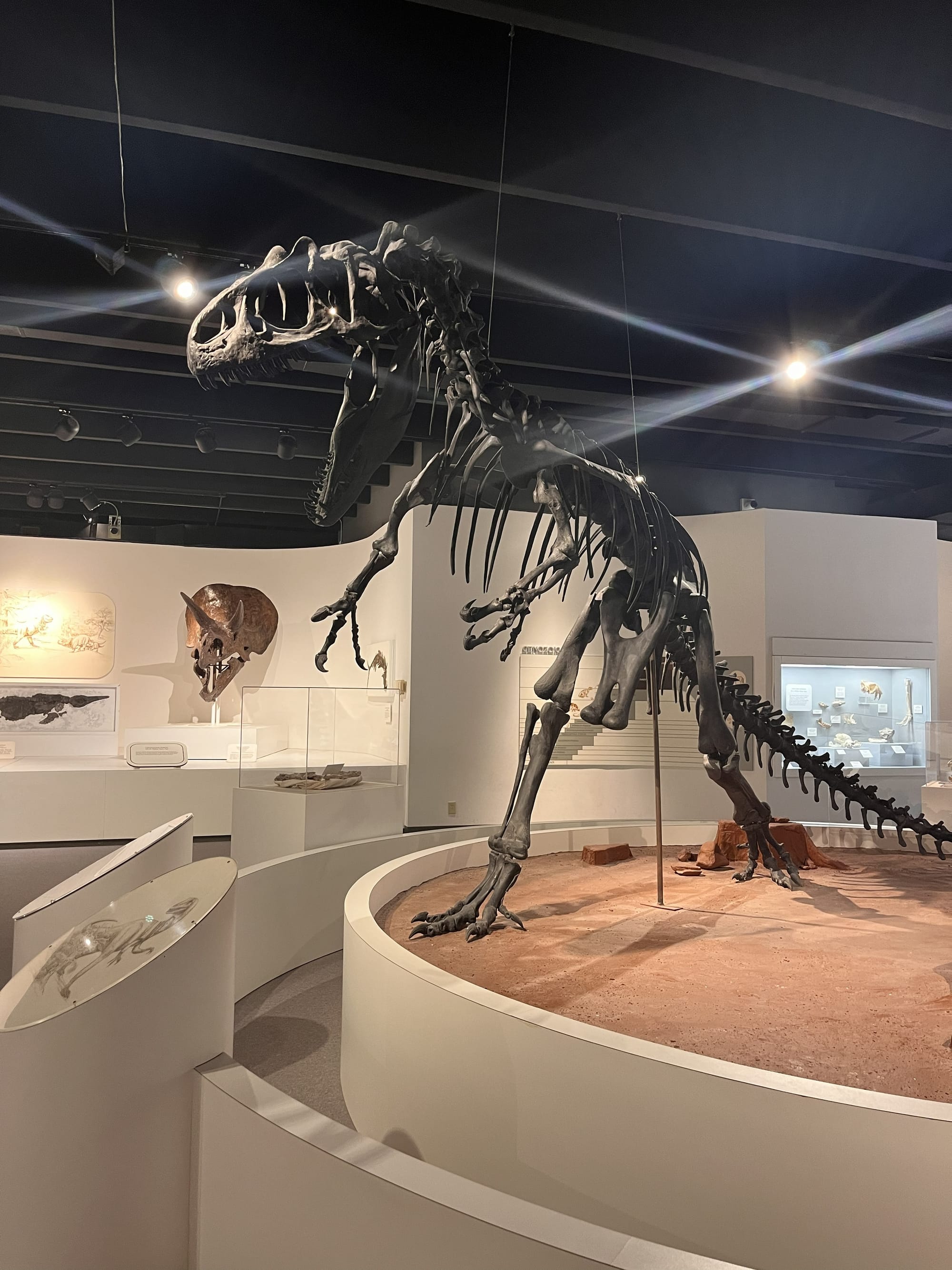

The Panhandle-Plains Historical Museum houses much more than you might expect. © Laura Pevehouse
What Palo Duro Canyon Taught Me About Texas
It’s unfortunate I missed seeing the musical TEXAS, because it probably would have done even more to help me ease back into living in the state after spending four months vagabonding around the Four Corners states.
I was feeling a bit melancholy about returning to a state I thought I knew after so much time spent exploring new territory. But stopping in Canyon and spending several days in Palo Duro helped ease the re-entry.
It reminded me that Texas really is big. Big enough to include geography as bold and awe-inspiring as The Grand Canyon and Utah’s Mighty 5 national parks. And big enough to still hold many surprises for me to find.
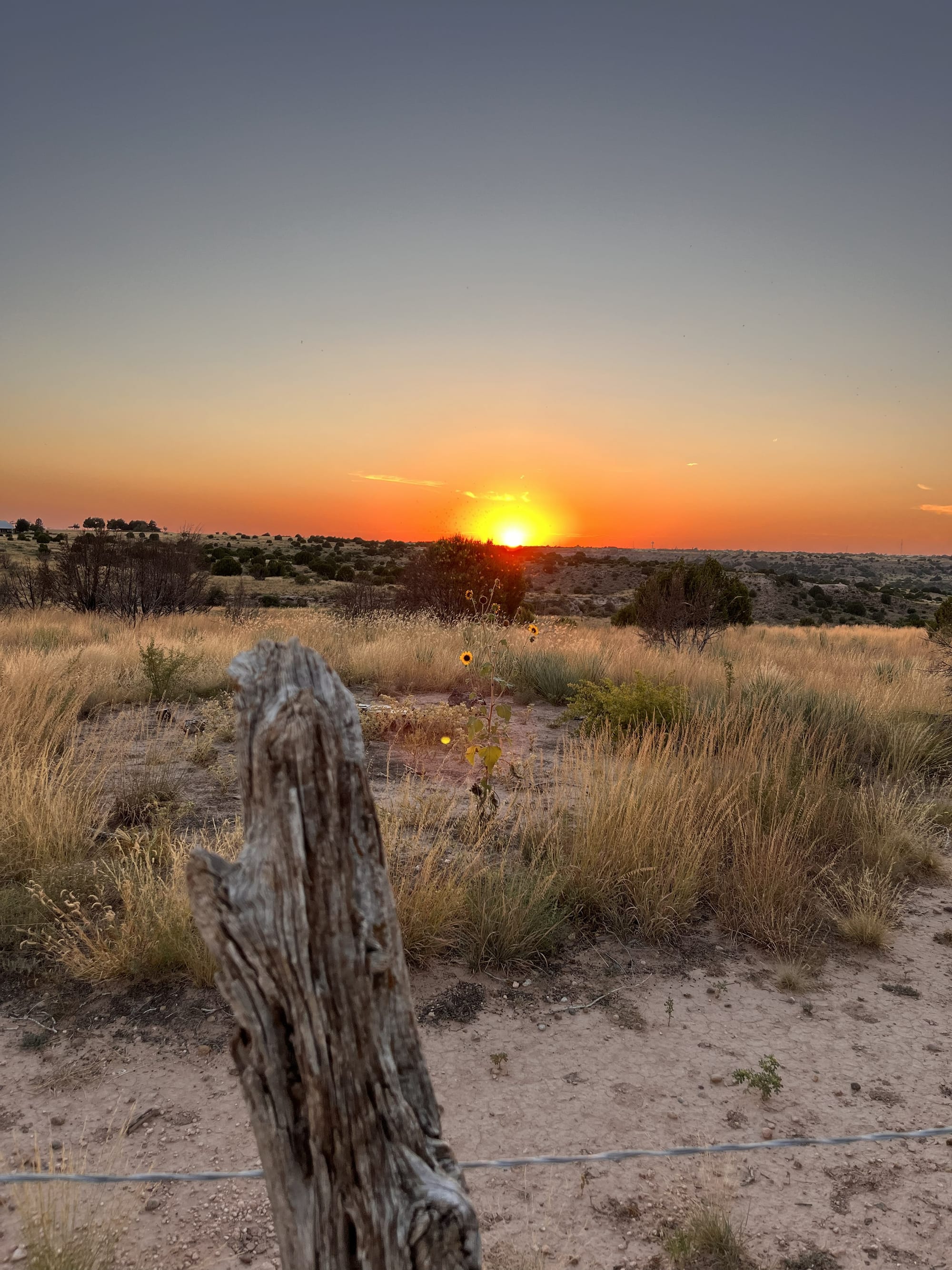
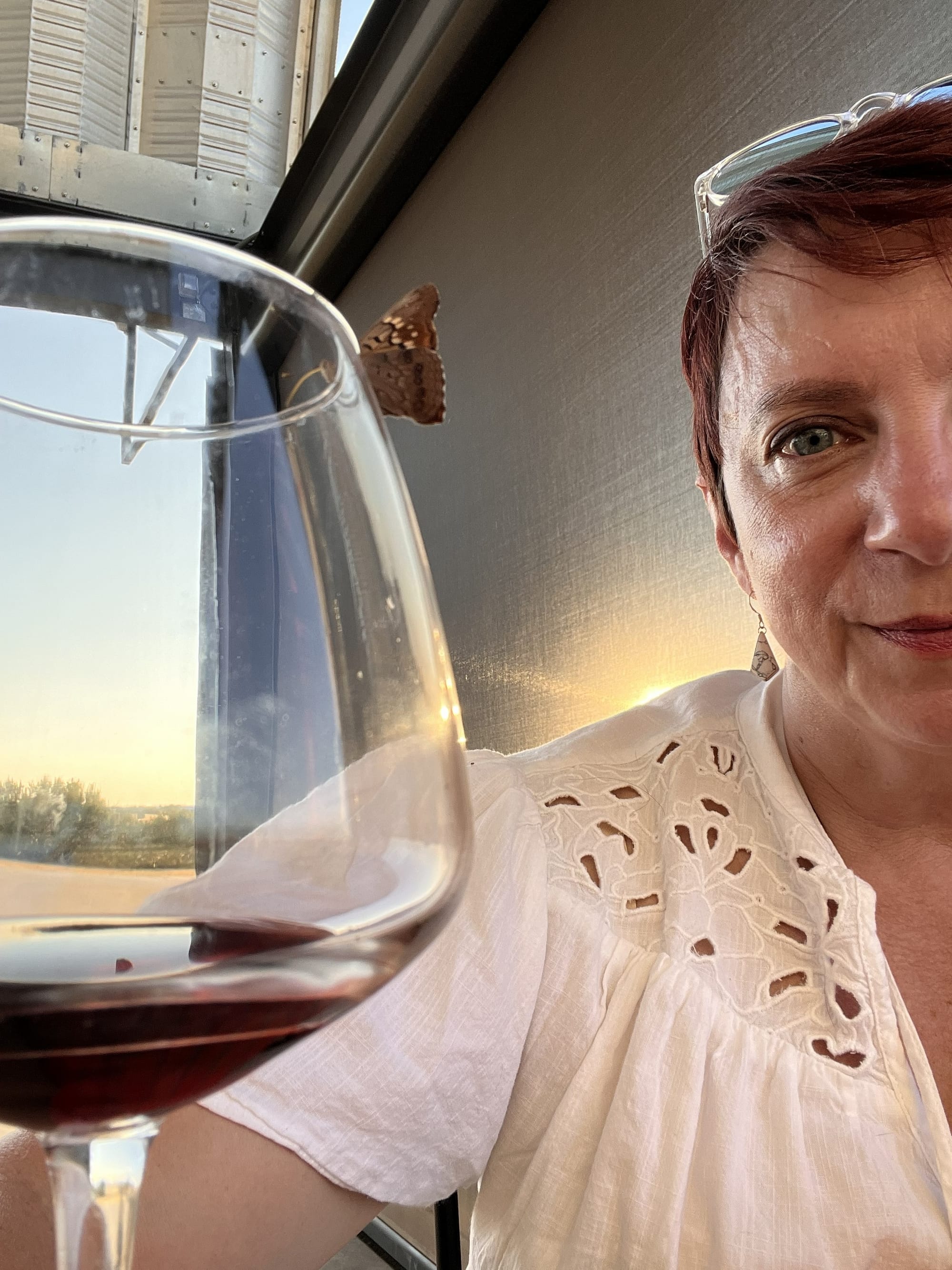
Sunset, wine, and butterflies at the Bar Z Winery in Canyon, Texas. © Laura Pevehouse
Comments