

A drive through Utah to visit the state's five National Parks has become one of the most famous road trips in the American Southwest, earning the nickname The Mighty 5.
Exploring all five parks requires at least a 7- to 10-day itinerary, and most travelers either fly into Las Vegas (closest to Zion) or Salt Lake City (closest to Arches) to rent a vehicle and start their drive. Even with the luxury I had of a month to explore the state, it took an unfortunate run-in with a deer, causing the need for car repairs in Salt Lake City, to get me off the desert roads and into Utah's green mountain forests of the Wasatch Range.
That's when I learned that past Sundance Mountain Resort on Mount Timpanogos lies the hidden treasure of Timpanogos Cave National Monument.
What to Expect on the Path to Timpanogos Cave
A trail with a 1,092-foot elevation gain didn’t seem that daunting to me after having spent a month hiking in Colorado. But with all that gain squeezed into just 1.5 miles, it didn’t take long for me to have flashbacks to the 3,000 stone steps I tackled in the Himalayas.
The trail to Timpanogos Cave may be paved, but it’s definitely not easy. It is better, though, than the first path that was created for tours of this landmark in 1888. That one climbed nearly straight up 1,200 feet and included ladders built from trees felled on the trail, and some logs bolted directly to the cliffs to provide footing.
Today, you just have to navigate what feels like endless switchbacks and a steady stream of tourists. Approximately 110,000 people visit the monument annually, with 60,000 to 80,000 touring the caves. It won’t be a quiet, solitary hiking experience, but you’ll come to appreciate their encouragement and the excellent views of American Fork Canyon when you stop to catch your breath (which I found myself doing frequently).
And there is a reward at the top: cave bacon!
What Is Cave Bacon? The Formations Inside Timpanogos Cave
Unlike the jerky you often pack for a hike, cave bacon isn’t edible. Its more scientific name is flowstone, and it’s just one of a multitude of fanciful formations in the Timpanogos, Middle, and Hansen Caves.
The ranger-guided tour takes you through the cavern chambers past a variety of cave formations, including stalactites, stalagmites, and helictites. In addition to the draped flowstone with brown and beige layers that earned it the cave bacon name, there are other food-named formations called cave popcorn. Many cave formations in Timpanogos display unusually vivid green and yellow coloration, caused by rare minerals such as nickel and aragonite.
Planning Your Visit: Tours, Tickets, and What to Know Before You Go
Located within the 250 acres of Timpanogos Cave National Monument, just 30 miles from Salt Lake City and Provo, Utah, these caves are covered by snow most of the winter season. But from mid-May to mid-October, you can book a ranger-guided tour through all three natural caves that are joined by two man-made tunnels.
It’s recommended that you book your tour tickets in advance on Recreation.gov because they can sell out, especially on weekends and holidays. You can purchase them up to 30 days before your visit, but be sure to note that the time you purchase is the time you begin your hike at the trailhead. Then you have an hour and a half to make the climb up to the cave entrance. And even though it may be warm outside, you might want to carry a light jacket for the cave (which is about 45°F, 7°C inside).
Beyond the Cave: Uinta-Wasatch-Cache National Forest and Surroundings
After about 55 minutes exploring the 1.2-mile cave system, I emerged to 6,700-foot mountain views, which reminded me that Timpanogos is just one jewel in the massive 2.2-million-acre Uinta-Wasatch-Cache National Forest, which stretches all the way from northern Utah to southwestern Wyoming. It’s thanks to the early protection efforts of the Forest Service, which declared Timpanogos Cave a Public Service Site in 1921, that the caves have been so well-preserved.
The drive back past Wasatch Mountain State Park and Deer Creek Reservoir toward my vagabond base between Park City and Heber City gave me more time to appreciate the beauty of the vast mountain corridor. The surroundings beckon with opportunities for hiking, backpacking, and skiing, and a sense of awe and peace.
What started as a simple cave tour had become a lesson in how much adventure Utah packs beyond “The Mighty 5” National Parks. I loved the stunning rock formations I saw in Arches, Bryce Canyon, Canyonlands, and Zion (Capitol Reef National Park is the 5th), but Timpanogos showed me a totally different set of geological wonders.
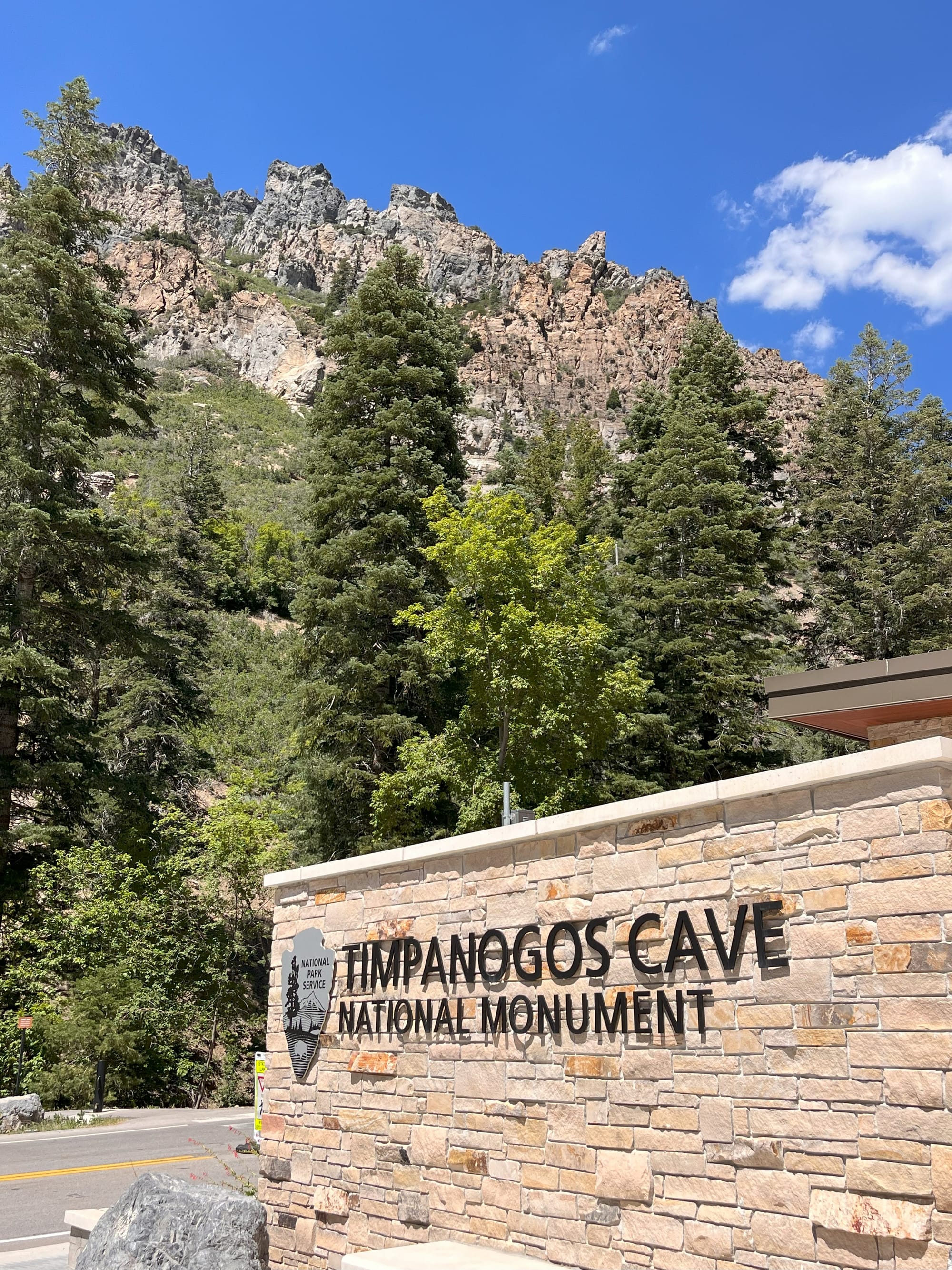
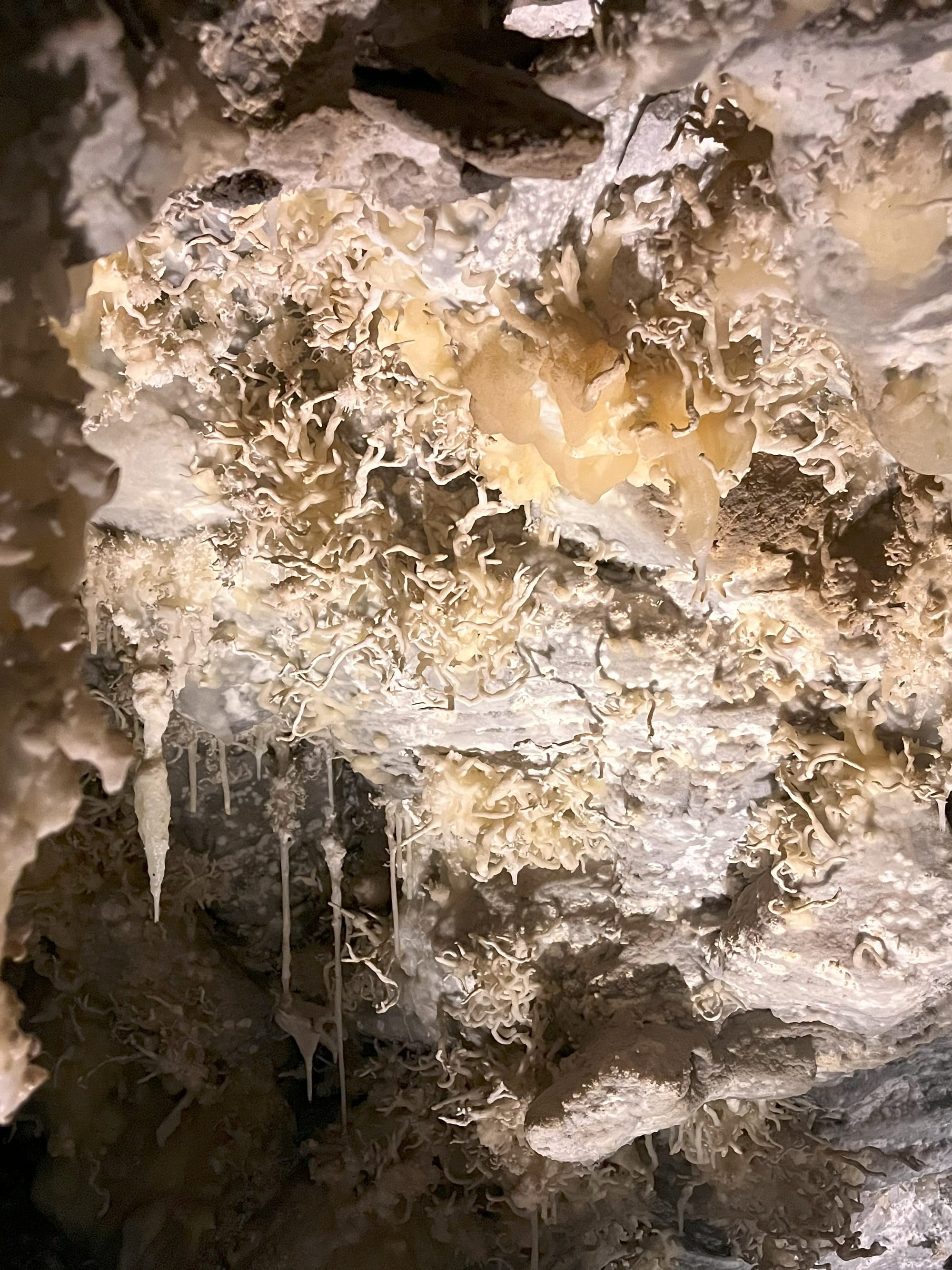
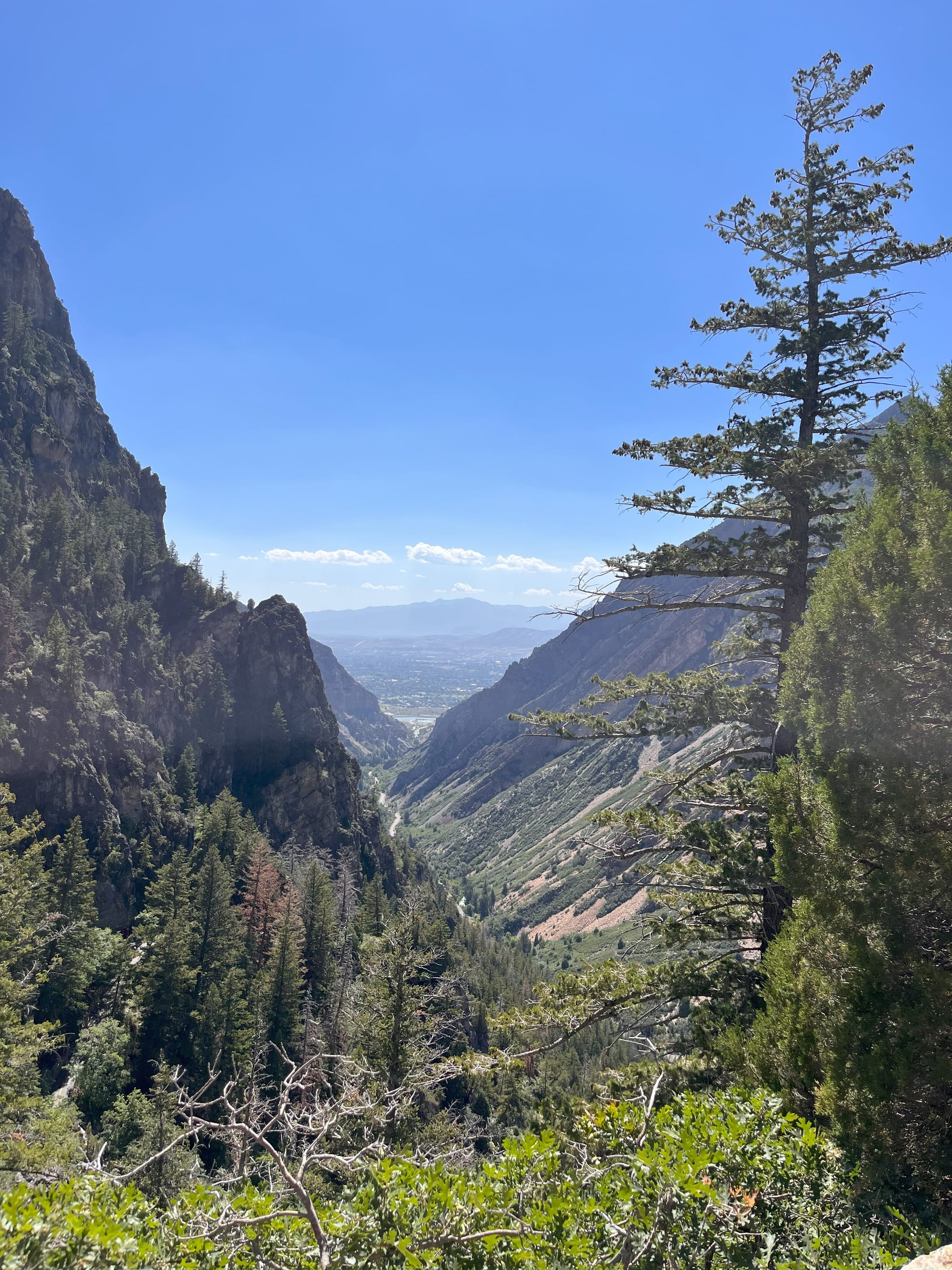
The Visitor Center entrance at Timpanogos Cave National Monument, helictites growing on the walls and ceiling inside the cave, and the view down American Fork Canyon toward Utah Valley. © Laura Pevehouse
Timpanogos Cave National Monument — Quick Facts
- Location: 30 miles from Salt Lake City and Provo, Utah
- Trail: 1.5 miles, 1,092-foot elevation gain, paved
- Cave temperature: ~45°F (7°C) — bring a light jacket
- Tour length: ~55 minutes, 1.2-mile cave system
- Season: Mid-May to mid-October
- Annual visitors: ~110,000 (60,000–80,000 cave tours)
- Tickets: Book in advance at Recreation.gov (up to 30 days ahead)
- Important: No gear, boots, or cameras previously used in any other cave (White Nose Syndrome prevention)
- America the Beautiful pass: Accepted

Comments